
Buying Land Near Burnet: An Acreage Due-Diligence Checklist
Turn an appealing Burnet acreage listing into a structured investigation of access, water, utilities, restrictions and the practical requirements of your plans.
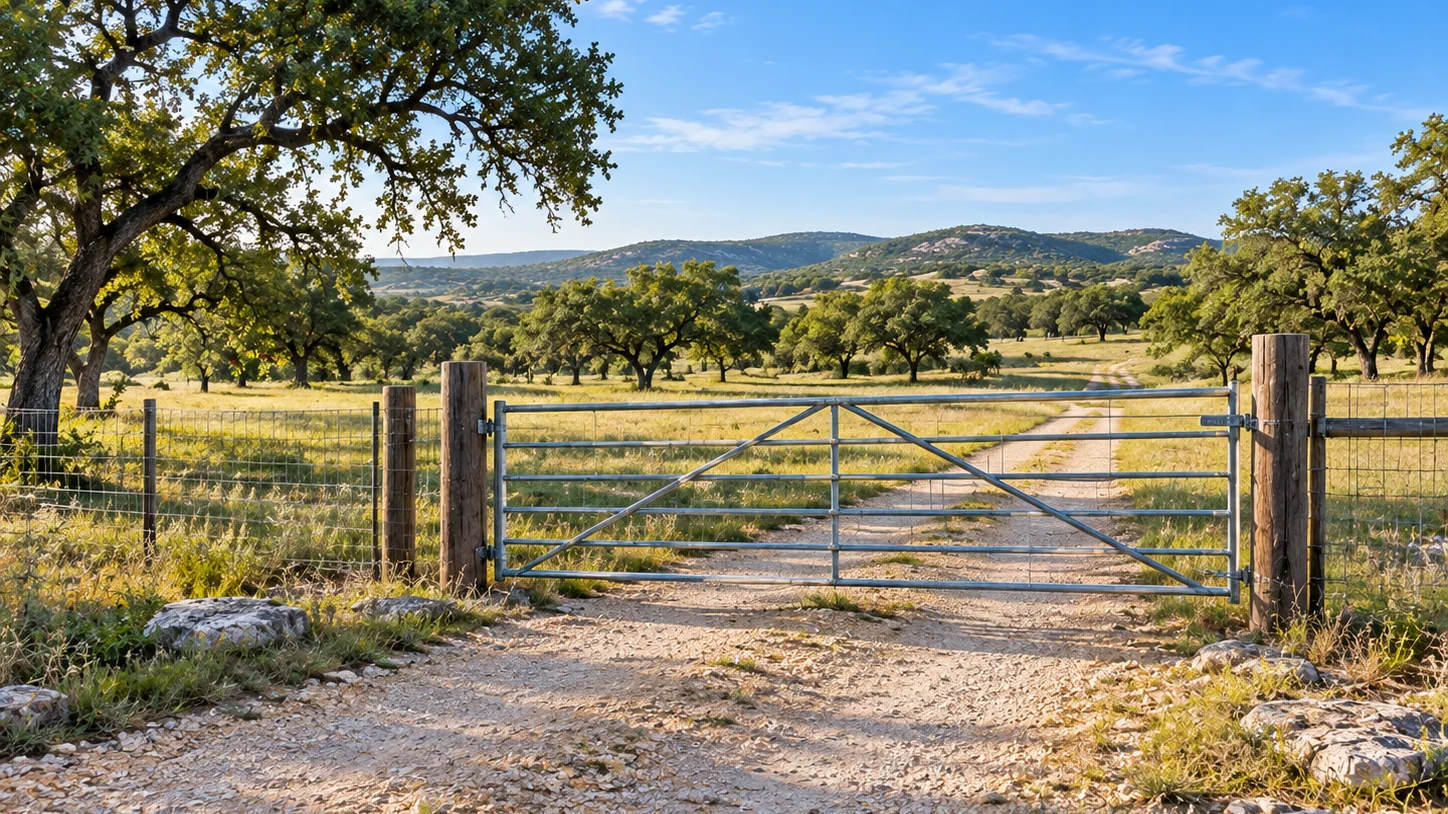
AI-generated editorial illustration. Not a photograph of an actual listing, client transaction or brokerage office.
Buying land near Burnet requires a different checklist from choosing a finished house. An attractive view, open space and a visible entrance do not answer whether a tract supports the use you have in mind. Before committing, separate what you can see from what needs records, provider confirmation or professional evaluation.
Begin with your intended use. A full-time home, a weekend retreat, a workshop and a grazing property lead to different investigations. The useful question is not simply whether the acreage is appealing. It is whether the particular parcel can support your plans on terms you understand.
We recommend a written due-diligence list that follows the parcel from legal access to the proposed building area. Put each unresolved issue beside the professional or authority who can answer it. That keeps important questions from being buried under the excitement of a land purchase.
Define the use before narrowing your Burnet acreage search
Our Burnet real estate page introduces local buyer guidance, while the brokerage's land service addresses land purchases. Decide which property type you need before comparing acreage totals.
Write a short description of your proposed use. Include the buildings you hope to have, how you expect to reach them and any activities that are essential to you. If you are undecided, identify the alternatives rather than assuming all uses remain available.
For example, a buyer considering a home and separate workshop should ask about both structures at the start. A buyer seeking space for animals should investigate that use specifically rather than infer permission from neighboring properties.
Avoid letting total acreage become the entire comparison. Ask a surveyor, designer or other appropriate professional which portions are relevant to access, construction and your intended activities. More land on paper is not automatically more useful land for your purpose.
Confirm access with records, not tire tracks
An existing road or gate is a reason to investigate access, not the final answer. Ask the title team and surveyor to identify the property and recorded matters, and seek legal interpretation where an easement or right is unclear.
Organize the access review around four questions:
- What route connects the parcel to a public road?
- What recorded rights support use of that route?
- Who is responsible for maintenance, and how is that documented?
- Would the route serve your proposed use and the vehicles it requires?
Also investigate the physical route with relevant professionals. Ask about driveway planning, delivery access and any approvals needed for an entrance. Do not assume permission for one existing use establishes permission for every future plan.
Our land and ranch acquisition service describes buyer guidance on access, water and development potential. For the individual tract, ask the appropriate providers and advisers to confirm utility, easement and restriction questions. Specialists still need to answer the technical and legal questions within their fields.
Build a utility and water confirmation sheet
Ask each provider about the exact parcel, not merely the road or subdivision name. Record who you spoke with, what was confirmed and what remains subject to evaluation.
| Subject | Question to resolve | Useful next step |
|---|---|---|
| Electric service | What service is available for the proposed location? | Obtain provider-specific information |
| Water supply | What supply arrangement is proposed and what must be verified? | Consult the provider or qualified well professional |
| Wastewater | What system and approvals would the intended use require? | Ask the relevant authority and qualified designer |
| Internet | Can the provider serve this address and proposed structure? | Verify address-specific availability |
| Road and driveway | Does the planned access work for the project? | Consult the responsible authority and relevant professionals |
Do not treat a neighboring well, line or connection as proof for your parcel. Obtain the information appropriate to the property and leave enough time for follow-up before making decisions that depend on it.
If an existing improvement is part of the purchase, ask what records and evaluations are available. Keep the existence of a feature separate from confirmation of its condition, capacity and suitability.
Review the survey, restrictions and site together
A productive review puts the proposed use, survey and applicable restrictions on the table at the same time. Ask the relevant professionals to identify conflicts before you develop a detailed plan around a preferred spot.
Potential questions include:
- Where are the property boundaries and recorded easements?
- What restrictions apply to the particular tract?
- Which approvals might the proposed improvements require?
- Where should site, drainage and soil questions be evaluated?
- What assumptions in the listing still need confirmation?
Do not rely on phrases such as “build-ready” or “unrestricted” without asking what they mean for this parcel. Have the applicable documents and requirements reviewed, including matters outside a private deed restriction.
If a home is already on the property, our homebuying services can support the residential side of the transaction as well. Keep the house evaluation and land evaluation coordinated, but do not assume one replaces the other.
Ask about flood information and tax treatment early
Use parcel-specific information rather than making assumptions from a dry-weather visit. The FEMA Flood Map Service Center provides official FEMA flood-hazard mapping and related products, with information that can change as maps are updated.
Ask the appropriate professionals how mapped information, drainage and the proposed site affect the investigation. A map is one source of information; it is not a personal assessment of every use you might propose.
For taxes, obtain the parcel's current records and discuss your plans with the appraisal district and a qualified tax adviser. Do not budget on the assumption that a seller's treatment will automatically apply unchanged to your ownership or use. Ask what must be established, maintained or reviewed for your particular situation.
This guide does not determine eligibility for a valuation treatment or interpret property rights. Those questions belong with the responsible authority and your legal or tax advisers.
Turn your Burnet land review into a purchase decision
Before an offer, divide your checklist into confirmed, pending and unacceptable items. Discuss the proposed contract and review timeline with your agent and attorney as appropriate.
A pending issue is not necessarily a reason to abandon a tract. It is a reason to identify the evidence you need and the point at which you must make a decision. For example, provider confirmation may resolve one question, while another requires an expert's site visit.
If you are moving to the area, our relocation guidance can help frame routine-travel and daily-service questions alongside the land search. A property that supports your proposed use should also work for your ordinary week.
For landowners preparing to sell, our seller services include pricing, marketing and transaction support. Organizing available access, survey and improvement records before listing can make buyer questions easier to address.
Frequently asked questions
Is a visible driveway enough to establish legal access?
Do not treat it as sufficient by itself. Ask the title team and surveyor what the records show, and obtain legal advice when the rights or obligations are unclear. Also investigate the physical route for your intended use. Legal permission and practical usability are different questions, and both deserve attention.
Does land near Burnet always have utility service available?
Do not assume availability for any specific tract. Ask providers about the exact parcel and proposed location of improvements. Record what they can confirm and whether further evaluation is required. A service visible nearby may be a useful lead, but your purchase decision should rest on property-specific answers.
Can we help compare a ranchette with a larger tract?
Yes. Start with how you plan to use the property, the upkeep you want to manage and the questions that must be answered before purchase. We can help organize the search and transaction. Qualified specialists should address technical feasibility, while an attorney can interpret rights and restrictions where needed.
Should I assume a seller's agricultural treatment will continue?
No. Ask the appraisal district and your tax adviser how the property's records, your intended use and any applicable requirements affect your situation. Do that before building a budget around an assumed result. We do not promise a particular tax treatment or provide a substitute for professional tax advice.
What is the best first step for a Burnet land search?
Write down the intended use, preferred location, general budget and timing, then list the features you cannot compromise on. That gives the search a clear purpose. You do not need to know every technical answer before calling, but you should be ready to identify which questions would change your decision.
Start with the parcel, not the sales phrase
Call D. Green & Associates at (830) 265-0113 to discuss land near Burnet. Learn more about our local brokerage on the About page, then bring your proposed use into the first conversation.
Our listed hours are Monday–Sunday, 8am–5pm, at 100 Wren St, Marble Falls, TX 78654. Call (830) 265-0113 for help organizing the search and the next questions to investigate.